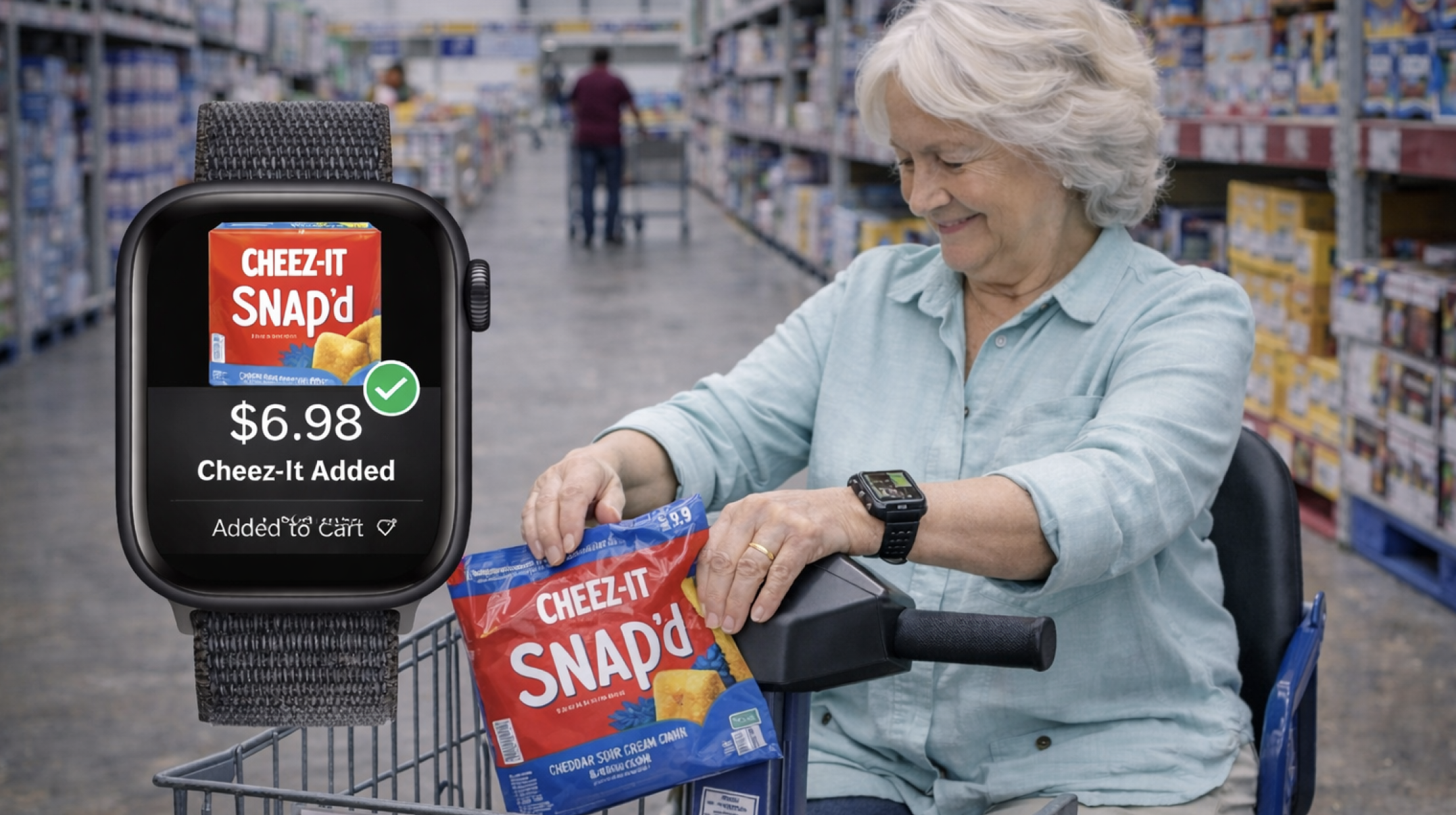
Challenge
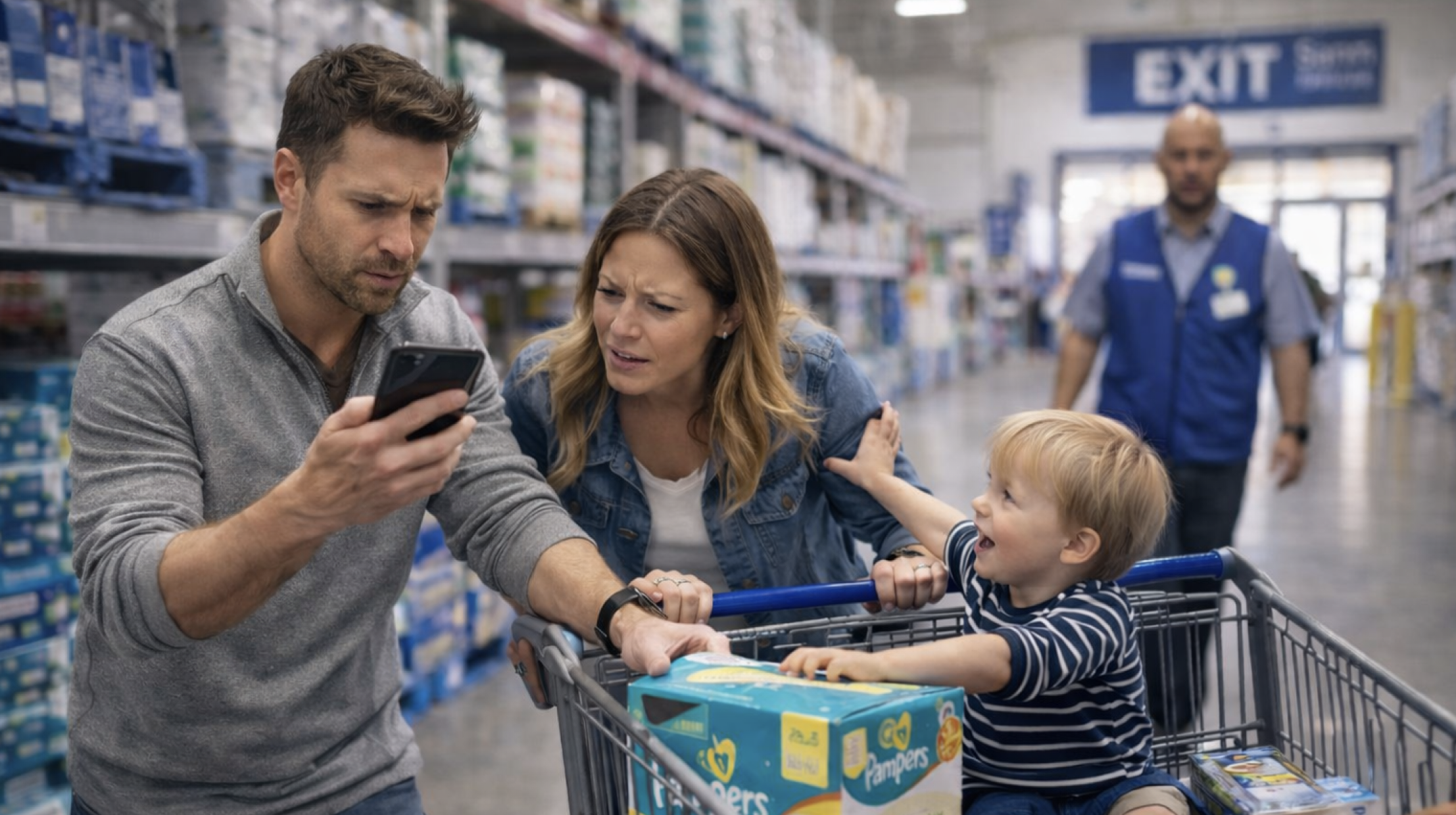
When scanning disappears, so does confidence.
AI is removing the beep, the receipt preview, the constant scan-check loop. That's a win for convenience — but a new problem for members: Did that register? Is my cart right? Will I get flagged at the exit?
Scan & Go today — phone in hand, cart in the other, kid demanding attention
"So what if reassurance didn't live in your hand…
but moved with you?"
The design question that shaped this project
Design Opportunity 01
Reduce distraction, restore flow
Shopping is motion-first — pushing a cart, managing kids, navigating a large space. Constant phone checks break that flow. A wrist signal doesn't.
Design Opportunity 02
Build trust through ambient feedback
Members approach exits with uncertainty. A quiet "you're good" signal before they reach the gate eliminates hesitation — without making them feel watched.
My Role · Solo UX Designer
I was the only designer on the team — partnered with four engineers who brought the same energy and curiosity I did. We teamed up to brainstorm, had a lot of fun doing it, and ended up building something we were genuinely proud of. I led the UX vision, designed the interactions, and shaped the story we told to leadership.
Josephine Wong · UX Design
Hongfei Xu · Engineering
Jose Joseph · Engineering
Niharika Gandhari · Engineering
Anjali Deshpande · Engineering